



“And it undeniably means England are the champions of the world,” Kenneth Wolstenholme said when England was crowned champions in the World Cup 1966 final.
“When falls the Coliseum, Rome shall fall; And when Rome falls—the World.”
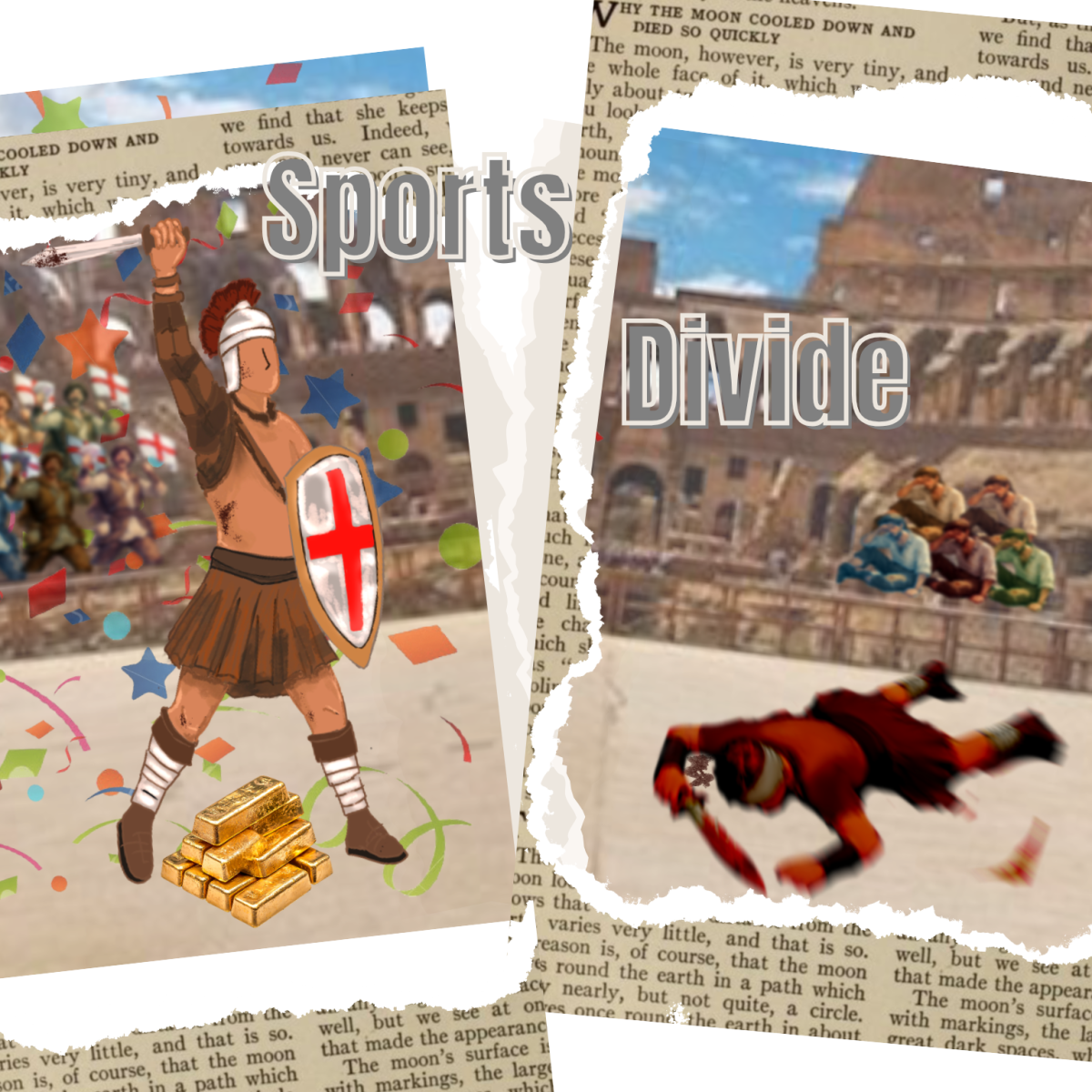
The game is entertainment. The gladiators fight for their emperor, while sportsmen fight for their countries; a dissatisfied audience, ending in slaughter. The cost of sport is too high. Nations are divided, countries are at war, and children are trained into little soldiers at arms, to fight for their favourite sports team.
“You can outscore your opponent and still lose, just like you can score less than them and win.” The divisive cost of sports is overlooked when the gain is visible. When the players treat the game as an opportunity to grow and foster a new, welcoming community, they win their game, but when players treat the game to grow their egos and to foster incredible amounts of arrogance, they lose both the metaphorical and literal game. However, the arrogant and egoic players are rewarded by the spectators, just like how the emperor rewarded the gladiators with 500 sesterces for an entertaining fight.
Not only is sport a microcosm of unity and division in our world, but a microcosm of the barbaric nature of humanity. Although there are some sportsmen who care for the game and its impacts upon the audience, the vast majority are arrogant, egoic and corrupted by fame, money or influence. This results in great schisms in any game as two or more overinflated egos wrestle for the point. The jeering audience only cares if there is entertainment and proceeds to “work themselves into furies over these absurd contests.” Orwell shares his insight on this matter, as he discusses how sports games not only affect the spectators present, but the country as a whole. He critiques those who believe “that running, jumping and kicking a ball are tests of national virtue,” and how the fate of the nation rests upon the haughty shoulders of the sportsmen. This strong faith in the players and the sport is uncannily like religion; the spectators, when challenged about their faith, bring about war and division amongst other believers. Thus, reinstating the underlying issue of disunion in the sports world, the spectators’ thirst for blood, and their attempt to “influence the game by cheering their own side and ‘rattling’ opposing players with boos and insults.”
Furthermore, the avid sports fan idolises the greatest of all time. Each club is a sect in the great religion of sport, tensions are high as clubs fight ruthlessly to win for king and country. “They are like innocent monsters,” warring to the “empyrean”, as “the voice of God booms from the stands.” Bruce Dawe in Life Cycle, depicts children, parents and sports fans as soldiers ready to fight for their club; regardless of their stature, beliefs, or lifestyle, they are united. United in the belief that the game is the utmost imperative, the game is life, the game is “their hope of salvation.” The average Joe becomes a loyal, reckless and raging crusader for “the six-foot recruit from Eaglehawk. What ensues schism? When a controversy or heresy challenges the dogmas? All hell breaks loose as the crusaders pick up their jerseys, trophies and collector cards to defend the greatest of all time, or should I say the whole Bible filled to the brim with the greatest of all times. These small sects of religion are only at peace for even smaller amounts of time, as they are at war with each other constantly. How is sport a uniting force when all it does is cause discord amongst the sporting community or the wider public? With “hearts shrapnelled with rapture” and “minds rippling out like streamers,” how can one expect sports fanatics to be sensible when all they know is celebration and fragments of extreme pleasure? And if taken away, they go ballistic, lost in transgressions and statistics of the betting apps. Looking for a new G.O.A.T to zealously defend.
Therefore, it is imperative that the attitude to sport is not “the game has little meaning unless you do your utmost to win.” Nonetheless, simply “you can score less than them and win,” because in sports, regardless of the situation, the players or the coach, everyone will crucify the opponent. If one merely thinks about the community grown through their sporting journey and not the materialistic gains, then they have truly won. Division is deep-seated in the sporting world because it is entertaining, money is thrown at it, and religions are based upon it. Whether there be champions, gladiators, gold medalists or crusaders. Sport is an inclusive religion that divides its believers.
When falls the game, falls sport; and when sport falls, the world.