
Wow, what have we become?
This global sensation has streamed across TikTok, with the account racking up over 3.1 million followers and 27.9 million likes — all within just 21 episodes. It has been reported as the fastest-growing TikTok account ever, amassing over 3 million followers in just nine days after launching on March 13th. However, this meteoric success comes with an asterisk. AI generates every second of it.
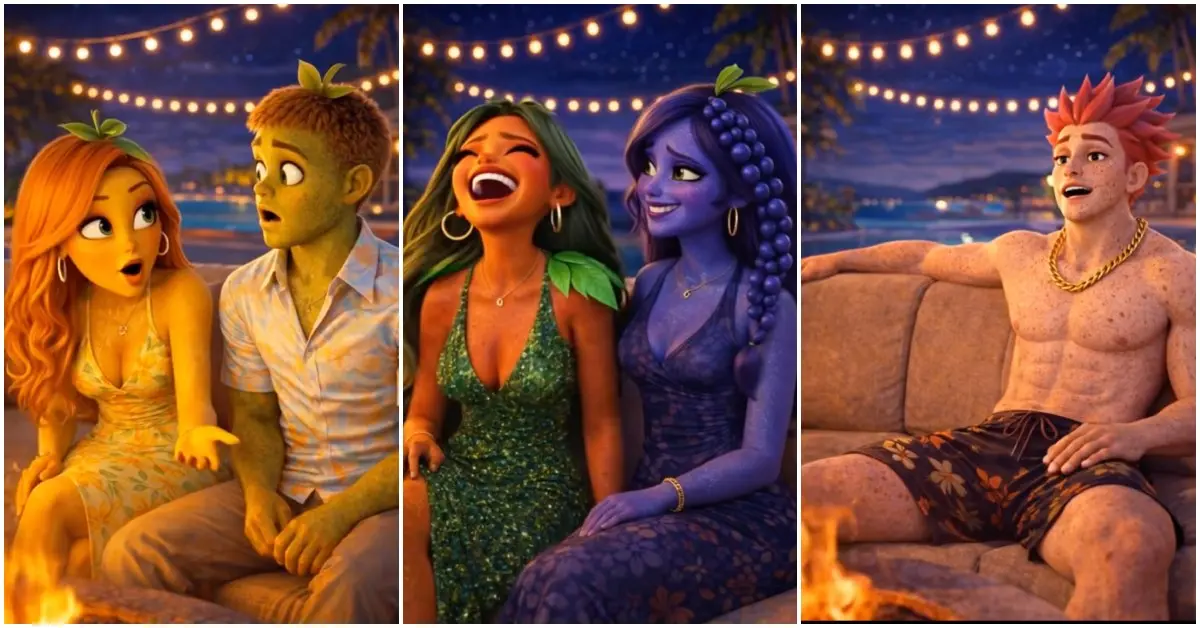
The account AI Cinema has produced over 21 episodes of a spin-off of the infamous show Love Island, with anthropomorphic fruit characters entering the villa and bonding or feuding with each other. The host, a kiwi, opens each episode with a cheerful “welcome back,” often caught doing something gloriously absurd, draped in a green sparkling dress that sometimes changes to match the episode’s theme. Main characters include fan favourites like Mangella, Kiwillo, Coconick, Strawberina and Watermelina, all conjured by AI software that scripts their dates, their drama, and yes, their kisses.
The series closely mirrors the format of the original show, complete with its theme music, swimsuit-clad contestants boasting defined abs, and a villa setting. The creator has even leaned into audience participation, maintaining a Google form asking viewers to submit plot suggestions, specifically requesting “drama,” “messiness”, and “backstabbing,” and inviting viewers to vote on who couples up with whom, much like the real show.
So… what’s the problem?
The obvious joy many viewers get from watching animated fruit flirt and argue is hard to deny. Real Love Island alumni Kaylor Martin and JaNa Craig even posted a reaction video, laughing along with the AI series. But not everyone has been so charmed. Critics have raised several serious concerns.
The first is creative. Critics argue that the content is problematic because it lacks human creativity, with the videos often choppy, ending abruptly, and featuring nonsensical plotlines. The term “AI slop” has followed the series everywhere, a label Merriam-Webster defines as low-quality digital content produced in bulk by artificial intelligence.
The second is environmental. AI generation is far from a clean process. These tools rely on energy-intensive data centres that consume large amounts of electricity and water to keep their servers cool. The irony of burning through precious natural resources to produce videos about fruit was not lost on audiences, with one commenter quipping, “We ain’t gonna have no clean water next month because y’all wanna watch Fruit Love Island on TikTok.”
The third is legal. It remains unclear whether ITV, the UK network that owns the rights to Love Island, has consented to the series or permitted AI video generators to use its intellectual property.
The Meltdown
Things came to a head recently when TikTok stepped in. Many social media users reported the AI Cinema account, citing violations of TikTok’s AI-generated content guidelines, including fake engagement and unlabelled AI creations. The account subsequently had half of its videos removed from the platform. What followed was a very public unravelling. A screen recording of the creator’s since-deleted story post showed complaints and threats to deliberately generate more videos purely to waste more resources, sparking further outrage online. For many, that threat crystallised the ethical concerns surrounding the whole enterprise.
So, where does that leave us?
Fruit Love Island sits at the intersection of everything the internet is currently wrestling with. It is undeniably entertaining to many, a harmless, surreal escape. But it also raises real questions about what we are willing to consume, at what cost, and who profits. As AI-generated content becomes faster, cheaper and increasingly indistinguishable from human creativity, audiences may want to ask themselves: just because something can go viral, should it?
So, with this series, potentially coming to an end, where does it leave the viewers? Are they simply just watching a series on TikTok, or are they killing polar bears? So I urge viewers (including myself) to question whether this content is actually providing entertainment or if you are simply ignoring the efforts of actors, directors, and editors worldwide to observe something beyond human capacity.