





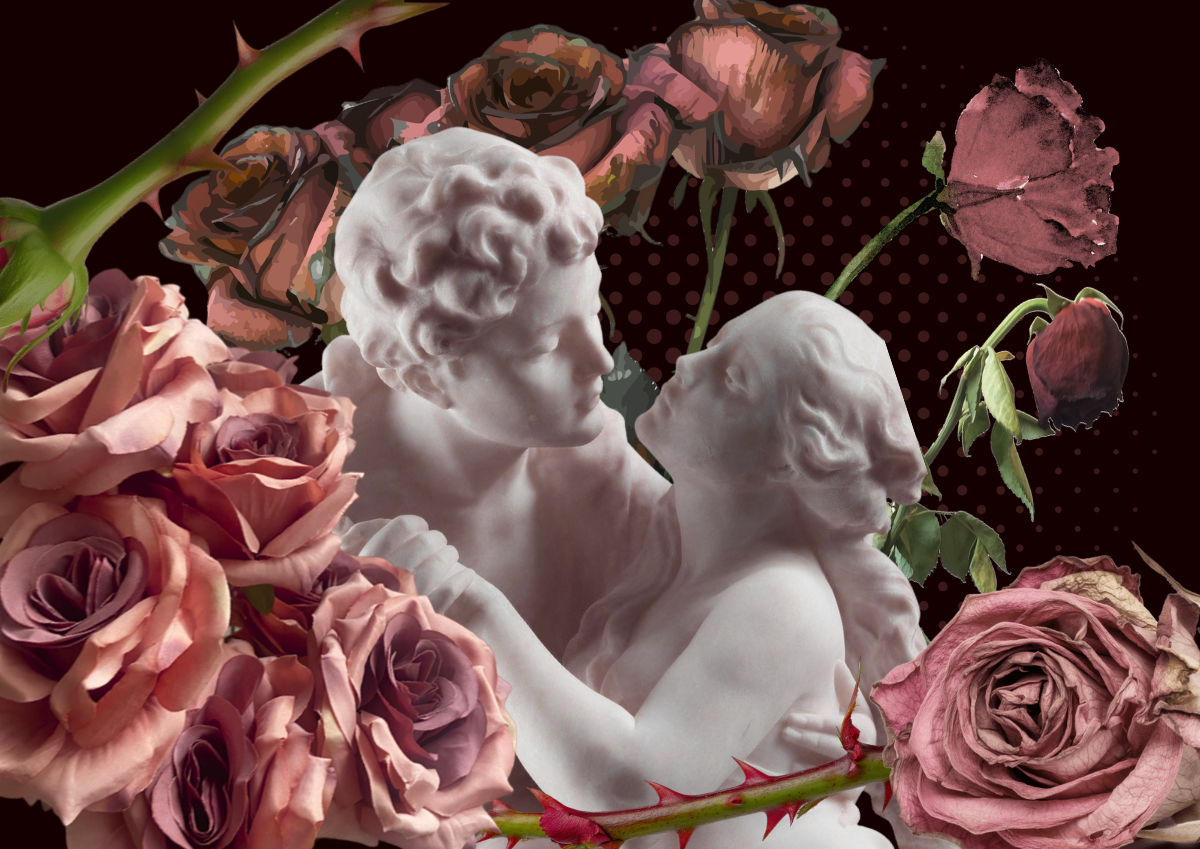
I remember as a little girl in primary school, there was this one boy. He would constantly make fun of me, stealing my stationery, pulling my ponytail. So, as any 6-year-old does, I went home and told my Mum all about it. And what was the response I got? “He only does it because he likes you” And just like that, the narrative shifted. This mean behaviour was no longer seen as cruel or degrading; instead, I cherished it, taking his actions as a form of affection. Looking back, this is how it started for everyone. One small lesson taught by a parent, and before you know it, it is what becomes ingrained in our society. But when did this start? Was it the 21st century that brought the romanticisation of toxic relationships in media with it, or has this issue been prevalent in everyday life for much longer?
It’s easy to see why so many teens misinterpret unhealthy, toxic relationships as romantic and something to be desired. After all, this is the ideal that is constantly drilled into their heads throughout movies, TV shows, books, social media, and even in the lyrics of our favourite songs. Apps such as Instagram and TikTok create a platform for this dangerous notion to spread. It can be seen in ‘BookTok’ where the men in ‘dark romance’ books that feature abuse and manipulation are glorified and longed for. Even older popular shows like Boy Meets World, where the main couple, Corey and Topanga, are supposed to be the IT couple, the love everyone wants, contain this romanticisation of negative behaviour. There is a point where Corey cheats on Topanga, and it is played off as something that made him certain Topanga was the one for him, rather than addressing the awful act for what it truly is. This shows that this isn’t something that has just sprung up overnight in the 21st century with social media; it goes back a little bit further. This is repeated to us over and over, whether we notice it or not: there is this idea that everything is fine as long as they’re in love, right?
However, this fascination with this dark, obsessive love is far from new. Classic literature has long explored these themes of destructive relationships, showing that teens’ desire for drama is not a modern occurrence. Emily Brontë’s Wuthering Heights depicts a passionate yet inherently toxic bond between Catherine and Heathcliff, with various examples of manipulation and codependency laying as the foundation for their relationship. Another classic text in which this romanticisation can be seen is F. Scott Fitzgerald’s The Great Gatsby, showing Jay’s idealisation of Daisy and constant pursuit of her, which only led to inevitable heartbreak, whilst to this day, his unrelenting chase for the girl is glamorised and seen as charming. So, whilst modern media may make the glorification of toxic relationships more evident, these themes have been existent for centuries, embedding themselves in the very construct of love that lies as the foundation of our connections.
Even I often find this drama enticing and exciting, but to me, real love is built on respect and trust. And despite the instinctive desire for this obsession in a relationship, it needs to be understood that this is a construct wired into our brains. Yet, despite this, healthy connections can still be formed, steering away from the negativity that can harm our well-being.
In the end, the normalisation of toxic relationships is not merely a modern phenomenon, blooming with the rise of online media, but it is intertwined through our culture and desires, spanning back through generations. Whether it’s your favourite TV couple displaying unhealthy behaviours, or that one adult who told you that ‘it’s just boys being boys’, these harmful ideals are rooted in the fabric of who we are, so the only question that’s left is: Will we break this chain? Or will we let it influence generations to come?




Adele LIM • Jun 4, 2026 at 8:13 pm
Honestly i think so too.