


In my Christian Studies class, we recently had a debate about whether it’s okay to call someone’s opinion “wrong.”
Almost everyone argued that yes, some opinions are wrong. In fact, one person even changed sides halfway through the discussion. I was one of the only people who held my ground and said no. Here’s why:
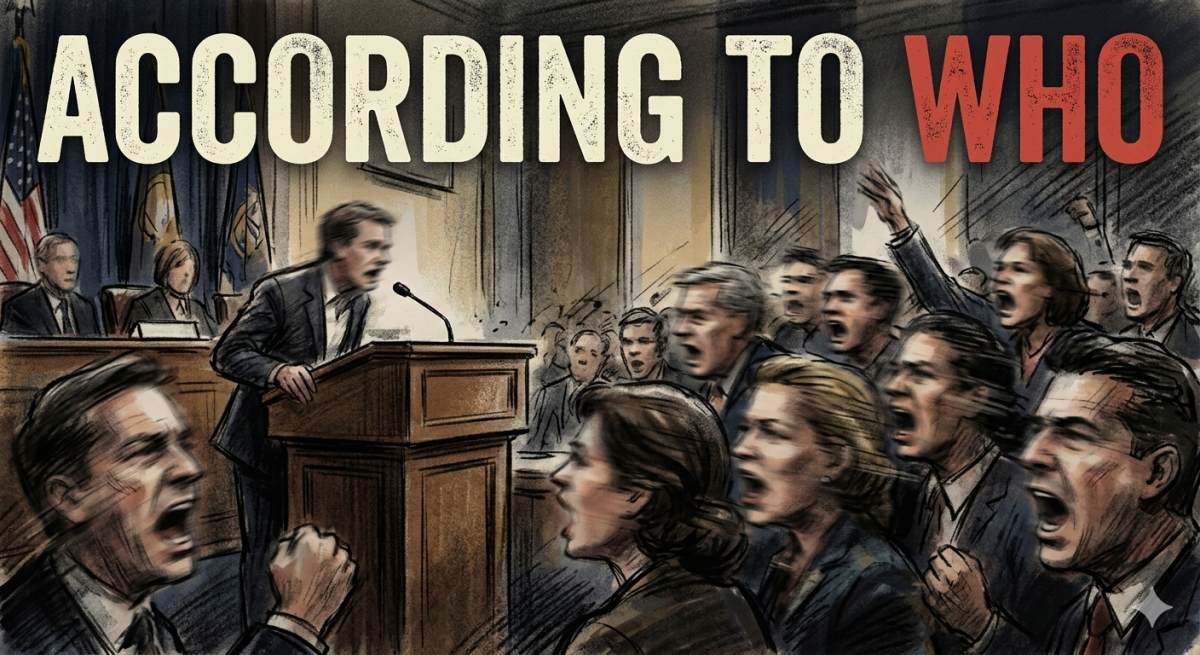
By definition, an opinion is a personal belief, view, or judgment. It isn’t a measurable fact. It isn’t a statistic. It isn’t something you can put under a microscope and test in a lab. So, when someone says an opinion is “wrong,” my question is simple: according to who?
In a school that views issues through a Christian lens, it makes sense that certain opinions will be disagreed with. Christianity, like any worldview, has its own beliefs about truth, morality, and right and wrong. But disagreement is not the same as incorrectness. Saying “I disagree with your opinion” is very different from saying “your opinion is wrong.” One expresses personal or theological conflict; the other claims objective authority.
Of course, facts that support an opinion can absolutely be wrong. If someone says, “I believe this because of X fact,” and that fact turns out to be false, then yes — the fact is wrong. But that doesn’t automatically make the opinion itself wrong. It may make it poorly supported. It may make it less convincing. But opinions are not math equations that become invalid once a number is off. They are personal perspectives.
Not all opinions even require research or evidence. Some are based on values, experiences, feelings, or interpretations. If someone says, “I think this is unfair,” or “I believe this is the right thing to do,” that belief is shaped by who they are. You can challenge it. You can question it. You can offer counterarguments. But labeling it as “wrong” assumes there is a universal judge of personal perspective.
And that brings me back to the central issue: who gets to decide?
In matters of fact, we can look to evidence. In matters of faith, Christians look to Scripture. But in matters of opinion, the line becomes less clear. Disagreement is healthy and debate is important. Changing your mind, as we saw in class is part of growth. But calling an opinion “wrong” risks shutting down discussion rather than encouraging it.
Maybe instead of asking whether opinions are right or wrong, we should ask whether they are thoughtful, kind, informed, or open to challenge. That shifts the focus from authority to understanding.
Because at the end of the day, when someone says your opinion is wrong, it’s worth asking:
According to who?