



Infrared radiation emitted from a heat source releases intense energy, causing exposed materials to undergo chemical damage. When an intervening object blocks part of the heat, the surface behind it is shielded. However, due to differential absorption, it remains darker than the surrounding area, creating a sharp outline.
The shadows endure.
This scientific phenomenon mirrors our social reality. Just as radiation leaves lasting chemical damage, harm inflicted upon vulnerable groups has scarred society with shadows, a reminder for the present.
The shadows reflecting the feared parts of our consciousness, the worst parts of humanity persisting long after their origins. Australia has been accumulating heat for a long time.
We often hear the words ‘Australia’ and ‘Multicultural’ put together. We hear leaders boasting about our multiculturalism to make Australia seem all the more unique. We celebrate multiculturalism on Harmony Day or in speeches on special occasions such as Australia Day. But what we don’t realise is that this ‘Multiculturalism’ only exists on the surface. Australians are especially bristle at the accusation of racism. The assumption is that we live in a post-racist society. The assumption makes white Australians comfortable, and it’s something that they’ll angrily defend if challenged. And yet, John Oliver, comedian and political commentator recently visited Australia describing it as, ‘the most comfortably racist country he’s ever been to.’
The Australian cultural refusal to accept anything is wrong with current society, this default to the status quo, gets in the way of meaningful dialogue about racism. It poses real harm as they shape our cultural norms. It’s important to acknowledge how far we have sunk in our ignorance, why that might be and what we can do about it.
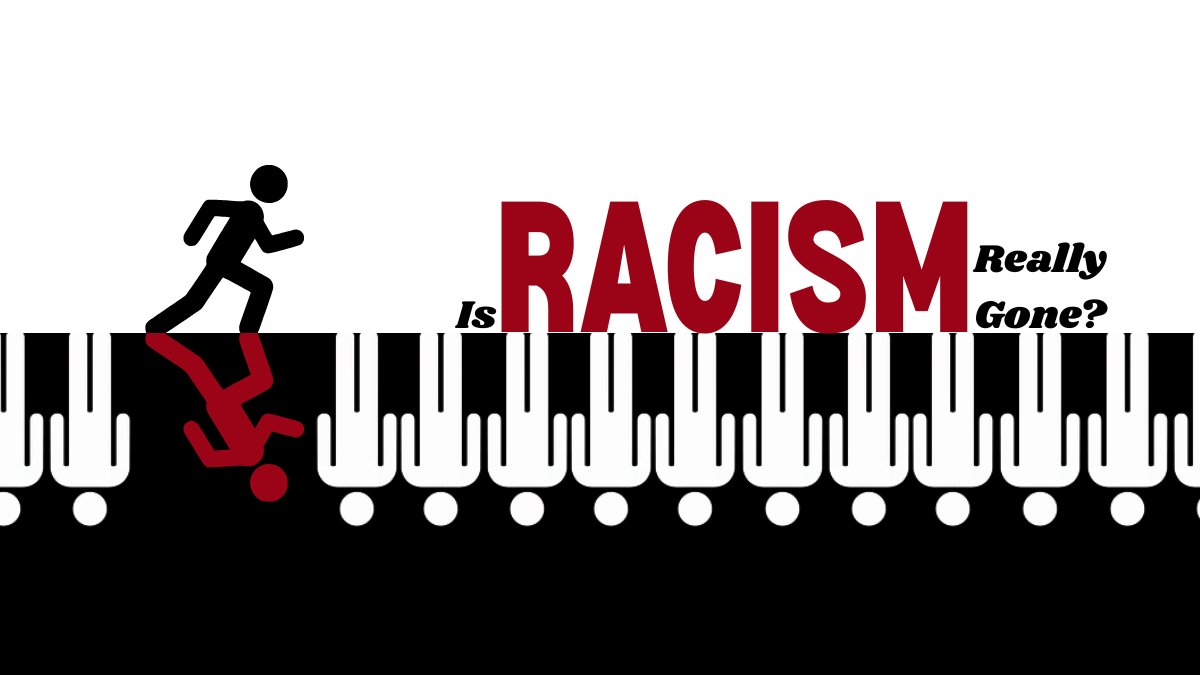
Let’s start by refuting the assumption of post-racism. Where is the evidence of the shadows? Radiation bleaches surfaces, a reminder that the impact has not diminished. Anti-immigration rallies gather thousands of people to protest against the multitude of tax-payers and workers contributing to our economy and the culture of our country. These events are showcased on national news however we rarely see measures taken to prevent these protests.
A recent attempt to give Indigenous Australians a voice in Parliament failed, yet again reflecting the 3 in 4 people unconsciously holding a negative prejudice against Indigenous peoples, the 11 in 12 Aboriginal peoples who have experienced racism.
And what about the racism thats harder to see? The microaggressions slipped into everyday conversations, looks, jokes and behaviours. I’ve grown up hearing political leaders on the tv proclaim how “diverse” we are as a nation however I am yet to see diversity in the power structures governing our very country. I’ve been taught about Australia’s multicultural population at school, yet I would have to listen to my teachers mispronounce me and many other classmates’ names countless times even after correcting them.
I was born in Australia and call myself an Australian. Yet I’m one of the 76% of ‘Australians’ experiencing racism at work, at the bus stop or at the shops. One of the 65% of students experiencing racism at least once a month. One of the people bearing witness to the 7 in 10 hate crimes directed to people like me, that go unreported as if they never happened.
At this stage we have to ask the uncomfortable: what makes this racism uniquely Australian? The colonial values have been carried on since the Age of Discovery, beginning with the European colonial invasion in 1788. And Australia is guilty of white ignorance and white fragility, a combination which allows those unaffected by racism to maintain their “innocence” and ultimately protects their privilege. That combines with the patriotic need to feel pride in your country, and makes us more likely to angrily defend rather than listen. All of this has seeped into our institutions, systems and policy.
And so now the most difficult question. How do we get rid of these shadows? Decontamination begins with removing the radioactive particle. Racism is systematic. While it manifests in individual attitudes and behaviours prejudice is produced from broader societal structures and institutions. While much of our colonial history has past their impact has not faded, rather mutated to more subtle and nuanced way.
If we want to brand ourselves as ‘multicultural’ then we need to be doing much more than simply bring this term up situationally or when it benefits us the most. We need to understand what it means to accept everyone and reflect these attitudes in everyday life. We need to confront the shadows we’ve gathered over time and acknowledge our flaws.
Maybe then we’ll have a chance at surviving against the radiation.