



Have you ever heard of the Pol Pot Genocide in Cambodia?
If you’re like most people globally, the answer may be no. The genocide, also labelled a ‘democide’* by RJ Rummel, who coined the term, occurred at the foot end of the Second Indochina War from 1954-1975, a major conflict across Vietnam, Laos, and Cambodia. I would also like to note, out of respect, that this has also been named the Vietnam War, or, to Vietnamese, the America War.
In this article, to remain as nationally neutral as possible, I will personally refer to it as the Second Indochina War.
The Pol Pot genocide was the strategic mass-murder of approximately 1,300,000-4,000,000 Cambodians over 4 years, which at the time was roughly 30 percent of their total population. It is also regarded by Rummel as the “most intense” democide in human history, due to its short time span. The genocide targeted political and ethnic enemies of Democratic Kampuchea, established after Lon Nol’s overthrow and Phnom Penh’s capture by the radical Khmer Rouge in 1975. The communist Khmer Rouge intended to turn Cambodia into a classless and ethnically ‘pure’ society of rice farmers and to be totally self-sufficient. This led to the outright villainising of their neighbour, Vietnam, despite the shared conflict they were experiencing. However, as demonstrated throughout history, these ideologically communist regimes ultimately turn out to be totalitarian, and Cambodia turned into an authoritarian-communist regime ruled by the leader of the Khmer Rouge, Pol Pot. The people of the Democratic Kingdom of Kampuchea were worked tirelessly, starved, and sent to camps, no matter their status.
Cambodia was completely shut off from the rest of the world. In turn, despite their short time in power from 1975-1979, ~30% of the population were strategically murdered to achieve the Khmer Rouge’s goals of an ethnically pure society (for context, enemies of the State were perceived as Chinese, Vietnamese, and Lao Cambodians, and Muslims and Buddhists, mainly non-Cambodians). Their isolationist nature arguably was a main factor in allowing such a proportionately massive human atrocity to be committed so quickly. There was little media coverage in Cambodia, and they were allies with their communist parent, China. Additionally, this was happening during the global Cold War, when fears of communism prevented much intervention because Cambodia’s isolation was ‘okay’ if they were not trying to spread their beliefs. This lack of popular discussion is also why many people around the world don’t even know this tragedy happened.
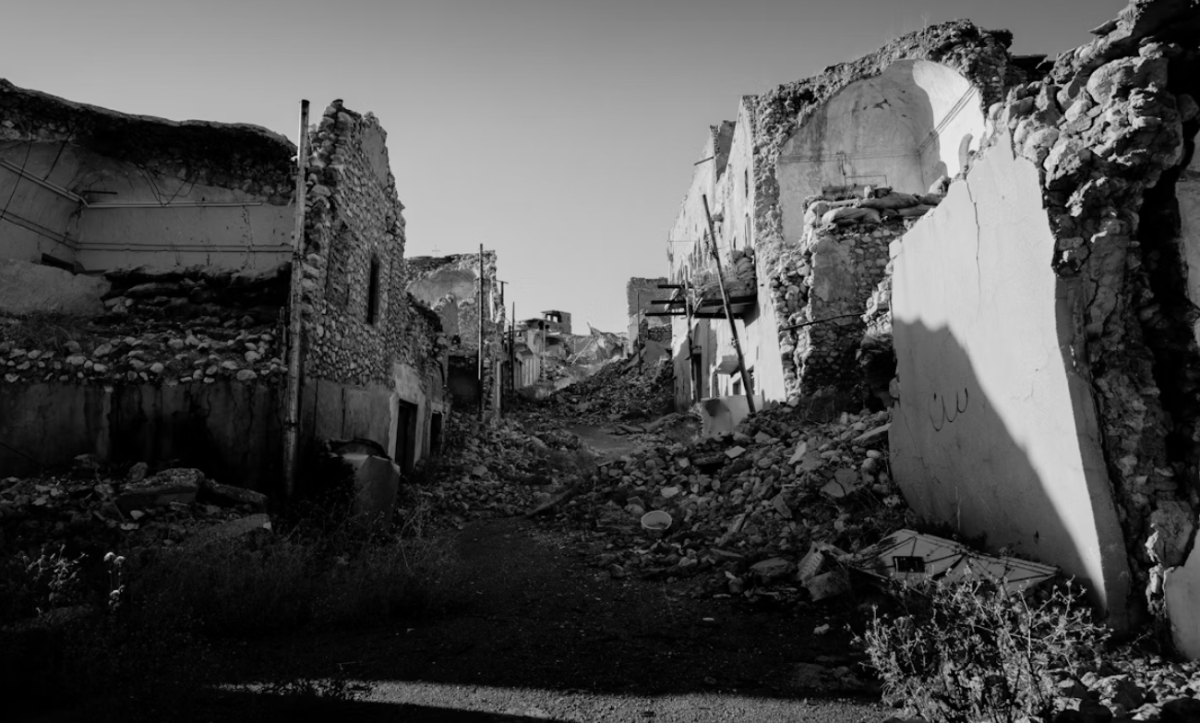
Not only was a third of the population eliminated, but hundreds of thousands, perhaps millions, continued to be affected by the regime and the effects of the Second Indochina War, even after both events had ended. The events caused thousands of political refugees to immigrate to Australia. The Second Indochina War is to account for much of the South-East Asian population in Australia. I want to avoid digressing further, but a majority of Cambodian (and Vietnamese-Lao) land was completely destroyed by years of bombing, chemical defoliation, and economic destruction. As an agricultural economy, the country was left devastated and struggled to find habitable land to farm on. Furthermore, many Cambodians continue to suffer from long-term health effects from defoliation: cancer, tuberculosis, Parkinson’s, etc. Environmental causes of Parkinson’s are a whole other matter. Stillbirths were also incredibly common. And this is relevant to me as well. As a Cambodian-Australian, I do not know most of my family on the Cambodian side. My grandparents died from what were probably environmentally caused health issues, oesophageal cancer and neurological diseases, before I was even born! And many Cambodian refugees today have no record of existence at all, which also contributes to the lack of evidence and representation of the larger impact on Cambodians. Also, quite annoyingly, due to a lack of demining throughout the entire Indochina region, Pol Pot was able to escape to the rainforest and live out the rest of his life, while other Khmer Rouge figures were incarcerated for their crimes against humanity.
Which also brings me to “The Killing Fields”. Not the movie, the practice. Thousands of Cambodians were murdered at these killing fields with pickaxes to save bullets, then dumped in mass graves. Millions of unknown deaths. Today, the most well-known killing field is Choeung Ek outside of Phnom Penh, also named a UNESCO Heritage Site as of 2025. This is only the beginning of international recognition of this devastating event.
The Cambodian Genocide is among the Top 5 most deadly genocides in history, yet is also one of the least-known ones. Is this due to lack of media coverage or isolation, or systemic anti-Asian behaviour from the West? It is hard to truly know, as the topic is incredibly multi-faceted, but the US actively prevented any economic reparations to Vietnam after the Second Indochina War, so why would Cambodia be any different? In fact, Cambodia’s infrastructure and national economic growth mainly began in the last 5 or so years, on account of China’s assistance. During my visit to Cambodia earlier this year, I made note of the brand new ‘Xi Jinping Boulevard’, a highway built in 2024 by Shanghai Construction Group. There is also the Phnom Penh Techo International Airport, an airport that opened in 2025, representing Cambodia and China’s intent to start a tourism culture. However, during my time at the airport, it was quite deserted. But I recognise Cambodia’s attempt. Cambodians or children of Cambodians get free permanent visas, which I think is great for Cambodian refugees who wish to immigrate back to their country.
Overall, I think there should be more active representation of historic tragedies, particularly in the non-Western world. In such an “Americanised” world, it often means we only get one side of the story, if we even get a story at all.
UNESCO’s recognition, as mentioned above, is only the beginning of international recognition. As such a horrific event, we should be taught about this much more widely, particularly in Australia who played a pivotal role in the spread of South-East Asian refugees. I surveyed a random group of 20 people, and TWO knew about this genocide’s existence. It is to be known that the community was a well-educated one too. In schools, we often learn about the Vietnam War, or the war with Vietnam, which I regard as an uninformed title. We also learn about America’s Civil Rights movement, America’s Middle East conflict, French colonies, and more. What little Asian topics only cover the American facet of history, rather than majorly exploring the Asian side, further perpetuating anti-Asian politics that were attempted to divide the world (not to mention the recent Cambodia-Thailand conflict, the latter being an ally of the US). Asia, particularly Southeast Asia, is historically underrepresented politically and economically, and the little coverage of these events proves that ultimately, we need to continue to make reparations to these screwed-over countries.
Take a visit to Cambodia, if you can.